

The Hormonal Acne Edit
The supplements, serums and spot treatments that actually made a difference in fighting post-pill acne

Alix Earle's sold-out acne brand launch has everyone talking skin this week so here's my experience with struggling with acne, plus the products and tips that have genuinely worked for me.

I’ve been acne-prone since my teens, mostly hormonal breakouts around my mouth and chin. My skin was never bad enough that I felt I needed Accutane or go on spironolactone, but I always had something on my face. I cycled though products, tried the occasional laser treatment, and hoped each new thing would be the magic fix. Anyone with acne knows it’s rarely that simple.
At the end of 2025, I wanted to come off hormonal birth control after nearly two years. The side effects were making me miserable, but the pill had done wonders for my skin. I had enjoyed seven glorious months of a clear complexion. (A side note: those months gave me a real appreciation for people who wake up every day without thinking about their skin. What a gift that must be.)
But even on the pill, the pesky hormonal zits were starting to pop up again and I knew my body was crying out for balance. Those red pimples were red flags being thrown at me from within like darts on my face. So I decided to go back to basics and actually understand what causes a pimple before spending another dollar on a new product and prepare myself to come off the pill without rebound acne.
The Four Pillars of Acne:
1. Excess sebum production
The sebaceous glands produce too much oil, primarily driven by androgens (especially DHT). This creates a rich, oily environment that sets the stage for everything else. It’s why hormonal fluctuations and stress (cortisol spikes androgen levels) both trigger breakouts.
2. Abnormal Skin Cell Shedding
In acne-prone skin, dead skin cells don’t shed normally - they’re stickier than usual and clump together inside the follicle instead. These sticky cells combine with excess oil and form the starting point of every single pimple, long before it’s visible.
This is also worth keeping in mind if you take hair, skin and nail supplements like Nutrafol, which are often packed with high doses of biotin. Biotin drives keratin production, and that excess keratin can bury deep into pores and trigger cystic acne.
3. Bacteria
C. acnes is a normal skin bacterium, but when trapped inside a plugged, sebum-filled follicle it thrives and multiplies rapidly. It feeds on sebum and produces waste products that irritate the follicle wall.
4. Inflammation
The immune system detects C. acnes and its byproducts and launches an inflammatory response. Attackkkk!
This is what turns a blocked pore into a red, pus-filled pimple or swollen cyst. Notably, research now shows inflammation can actually begin before the pore is fully blocked, making it a driver of acne rather than just a downstream effect.
My Strategy
I was terrified of a huge post-pill acne flare up so I set about devising a strategy for each of these four pillars to give my body the best shot at keeping my skin clear or as close to clear as possible.
Step 1 — Control oil production and hormone balance
This is my supplement stack , which I started taking a couple months before coming off the pill and have continued it as it seems to work well:
Clearstem MINDBODYSKIN: Key ingredients like DIM, Vitamin B5, Glutathione, and Turmeric optimize digestion, liver detoxification, and hormone regulation.
DIM (additional 100mg in the evening): My OB-GYN recommended adding extra DIM on top of the Clearstem dose to help my body metabolise excess estrogen.
Zinc 30mg: Studies suggest that zinc help lower DHT levels and therefore reducing the hormonal signal that triggers excess oil and clogged pores. It is also shown to suppress inflammation to make pimples less red, swollen and painful. Which for me, as a sufferer of cystic acne, this is huge. Zinc is also essential for wound healing and can also help existing spots resolve faster.
Also worth a honorary mention here is drinking spearmint tea to reduce androgens and taking phosphatidylserine (try saying that three times quickly) before bedtime which I have recently discovered for lowering nighttime cortisol. A separate post on that is coming.
Step 2 - Exfoliation
I generally avoid retinol on inflamed, active breakouts. Retinol speeds up cell turnover, and if you’re already having a problem with sticky, overproducing cells, it can worsen inflammation and redness. AHAs and BHAs are a better starting point. There are so many great products on the market so I’m just going to focus on the two I’ve seen the most success with.
Sofie Pavitt Mandelic Acid Serum
I’ve seen some dermatologists virtually sneer at the use of mandelic acid for acne as its generally regarded as better for managing post-inflammatory hyperpigmentation rather than acne itself. However, if Sofie Pavitt the “acne whisperer” herself swears by it, I was game to give it a try. I have to say, I’m not sure exactly why but my skin drinks this stuff up - I prefer it over other acids and will often apply this serum as part of my routine morning and night. It seems to be just the right amount of gentle exfoliation to keep my pores clear and I wake up in the morning with any redness and small blemishes calmed or even gone.
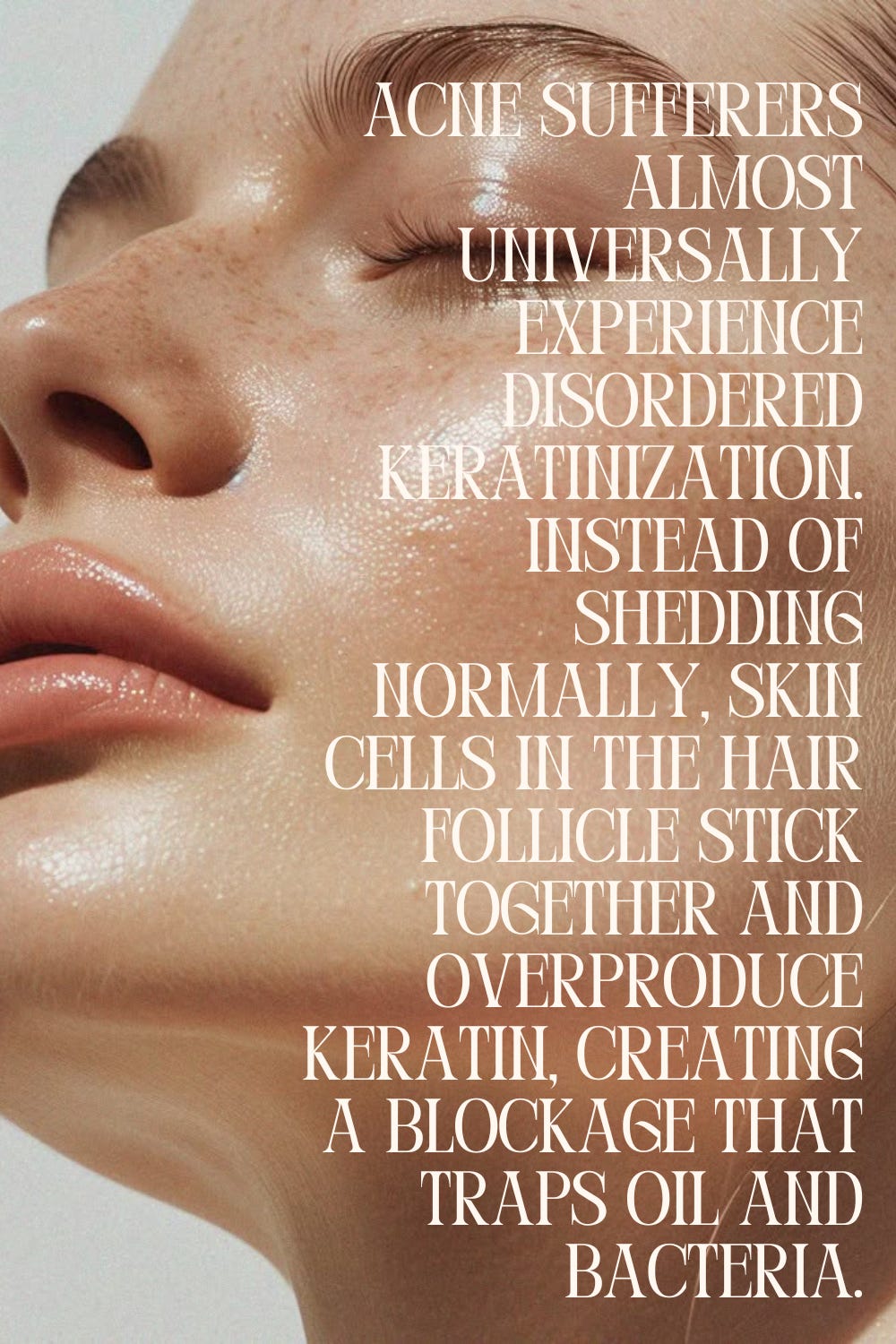
If acne sufferers struggle with overkeratinazation of skin cells, then azelaic acid can be helpful by normalizing keratinization and effectively reducing excessive, abnormal skin shedding. This action helps keep pores clear and prevents comedone (blackhead/whitehead) formation, making it a key treatment for acne, rosacea, and congestion without harsh irritation. Which is also why it can be helpful for people with KP on the back of their arms, as that is also from the buildup of excess keratin.
Step 3 - War On Bacteria:
Drying face only with Clean Towels
I rolled my eyes at these for yearsss as a total con now I wish I had started using them sooner. I won’t put a towel near my face now and I’m convinced that eliminating that source of bacteria has made a noticeable difference.
Love love love hypochlorous. So multi-functional and easy, it is a weak acid naturally produced by the body’s white blood cells that destroys the cell walls of C.acnes bacteria on contact. It also calms inflammatory signals, supports wound healing and supports a healthy skin barrier. Tower 28 has a popular one but I couldn’t justify shelling out $28 each time for what is essentially saltwater in exchange for cute branding. The Amazon one does the job and I spritz it on liberally after I’m finished with cleansing, morning and night.
Yes, these buzzy wands effectively kill C. Acnes bacteria by sing a low-level electrical current to produce ozone, which creates a germicidal effect and reduce inflammation. Use with caution as it can also dry out skin and if overused so you should limit sessions to 2-3 times a week rather than daily to protect your skin barrier.
Topical benzoyl peroxide is also great for killing bacteria, I just find it dries me out faster so it’s not my first choice.
Is there a product that targets all four pillars??
There is a lot of overlap and complimentary action happening between the items listed above that should have an overall positive impact on inflammation. If you’re still looking for a spot treatment, sulfur might be what you’re looking for.
This fan fave features Sulfur, Salicylic Acid, Zinc Oxide, and Calamine. I admit I’ve only recently seemed to have figured out the best way to use it. I’ll do my full face routine including moisturizer then as a last step, I’ll dab a cotton swab into the lotion and dot on any emerging pimple, big or tiny. When I wake up, it seems to have calmed the ‘anger’ in an inflamed pore.
The Ordinary Sulfur 10% Powder-to-Cream Concentrate Acne Spot Treatment
Featuring 10% sulfur, this product touts benefits such as controlling oil, unclogging pores, reducing inflammation and bacteria.
One important note: sulfur is very drying and should never be applied to broken skin or freshly picked spots. I once applied AHA to some raw pimples and essentially gave myself a chemical burn. Learn from my mistakes, girls.
Having a clearer understanding of what’s actually happening under the skin has changed how I approach my routine. I feel more empowered with my daily practices and product choices because I am intentional about the purpose they are serving. I’m not infallible - I got a couple pre-menstrual cystic pimples pop up recently on my chin that I got injected. But it’s been four months now and I have yet to see any crazy rebound post-pill acne so hopefully my body has found a more harmonious inner balance through this regime.
The real shift for me is that I feel more at peace with my breakouts now because I’m human and my body is just doing it’s job at fighting the inflammation and I can help it out. I also noticed a couple of those cysts were popping up in the same follicle as previous breakouts and learned that damaged follicles are a thing. The good news is apparently you can ‘retrain’ them - hurrah! If you’d like more tips on that, let me know in the comments and I’ll bring on an expert to talk us through it.
I am passionate about this topic and could talk for hours nerding out on beauty science and I hope this has been helpful :)
I’m not a doctor, and nothing here should be taken as medical advice — this is purely my personal experience. Always consult your healthcare provider before making changes to your routine. Heads up: some links in this post are affiliate links, so I may earn a small commission if you buy through them. I only ever share products I genuinely use and love.